
Why the name Garden City?
When people ask about the inspiration behind our company name, the answer touches on something much deeper than branding. "Garden City" speaks to our worldview and personal calling—our life's work. It reflects a vision that has guided thoughtful community-building for over a century, and one that continues to resonate today as we seek to create places where people truly thrive.
From Garden to City: A Timeless Journey
The name "Garden City" stems from a profound idea: that the human story began in a garden and culminates in a city. This vision captures more than just a balance of nature and community; it reflects a worldview that humanity's journey moves from creation in a garden to ultimate fulfillment in a city to come. The juxtaposition of beginning and destiny defines our calling: to redeem, build and preserve our community environments as places of peace, beauty, and community. For Garden City Communities, this means our work is not merely about development, but about bearing witness to the hope that harmony, restoration, and meaningful community are possible when we honor both our history and our destiny. In living out these convictions, we strive to create places that echo this story, inviting others into a way of building and belonging rooted in enduring purpose and hope.
It's a vision of harmony between the natural world and built environment that has shaped the career of our founder, Lasserre Bradley. Beginning his professional journey as a landscape architect and transitioning into development, Lasserre has spent nearly three decades practicing redevelopment and revitalization of the built environment. This ability to navigate comfortably between the serenity of a garden or passive park and the dynamic pulse of an urban core epitomizes the essence of Garden City. It's about understanding that great places require both: spaces for restoration and renewal and the animating energy of human connection.
The Garden City Movement: Revolutionary Urbanism
Our name also draws inspiration from the Garden City movement, a revolutionary concept in town planning that emerged in the late 19th century. Pioneered by Ebenezer Howard with his 1898 book To-morrow: A Peaceful Path to Real Reform (later republished as Garden Cities of To-morrow), this movement sought to address the pressing issues of overcrowded, polluted industrial cities by establishing planned communities with abundant green spaces, limited size, and mixed land uses.
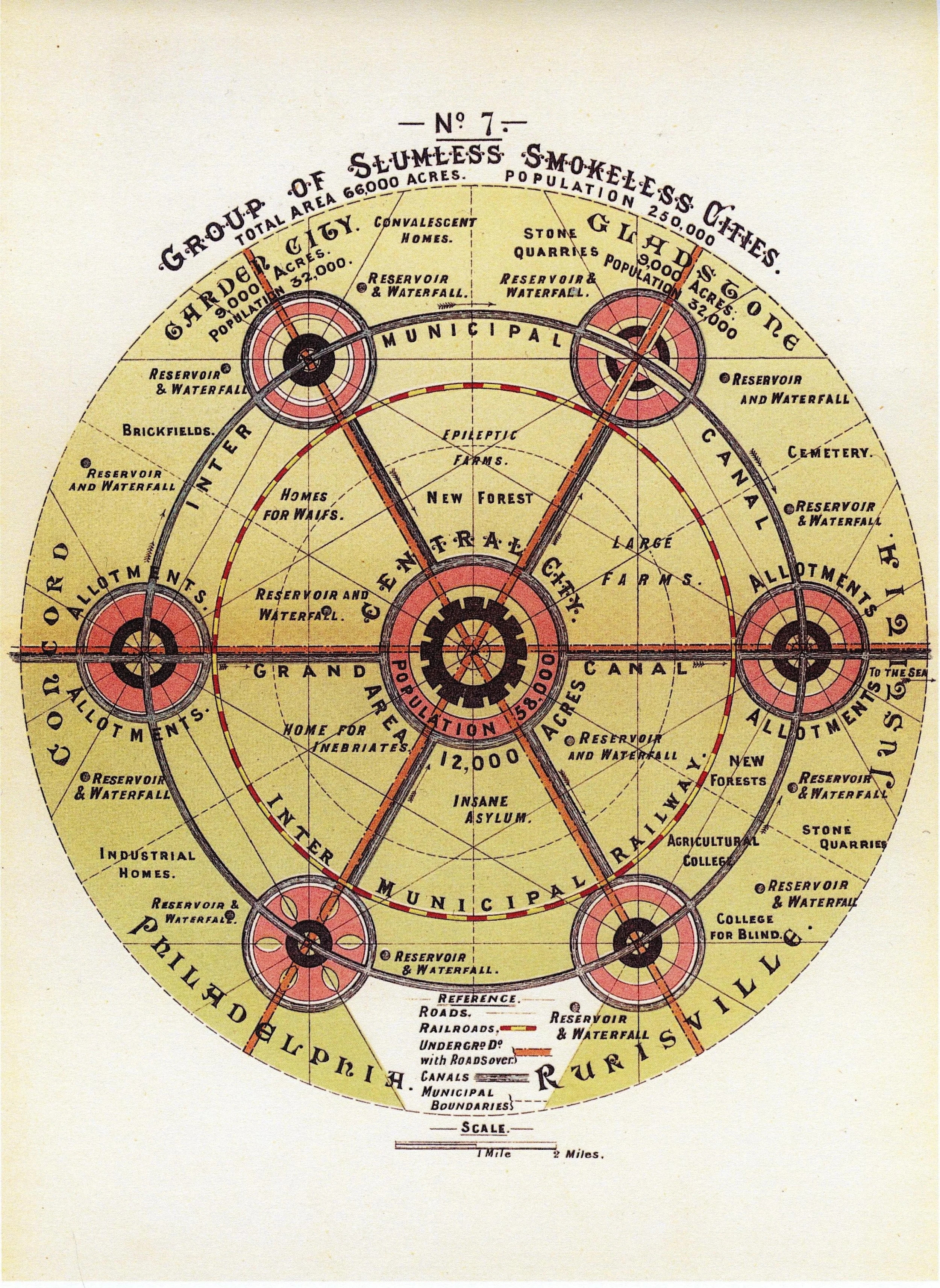
Garden City Conceptual Plan - Ebenezer Howard
Howard's vision was radical for its time: create self-sustaining communities that combined the best aspects of both urban and rural living. By integrating green spaces, residential areas, and mercantile and industrial zones into a cohesive layout, Howard and other key figures like Sir Raymond Unwin and Patrick Abercrombie laid the groundwork for subsequent movements in holistic and sustainable urban development.
The Garden City movement sparked both enthusiasm and debate. Jane Jacobs and others challenged Howard's plans as unrealistic, questioning whether such carefully orchestrated communities could foster the organic vitality that makes cities truly livable. Yet despite these critiques, the Garden City movement influenced a generation of planners and provided inspiration to some of the greatest examples of planned communities, including John Nolen's masterwork in Mariemont, Ohio, a community that still thrives today as a testament to thoughtful design and serves as one of the many career inspirations of our founder.
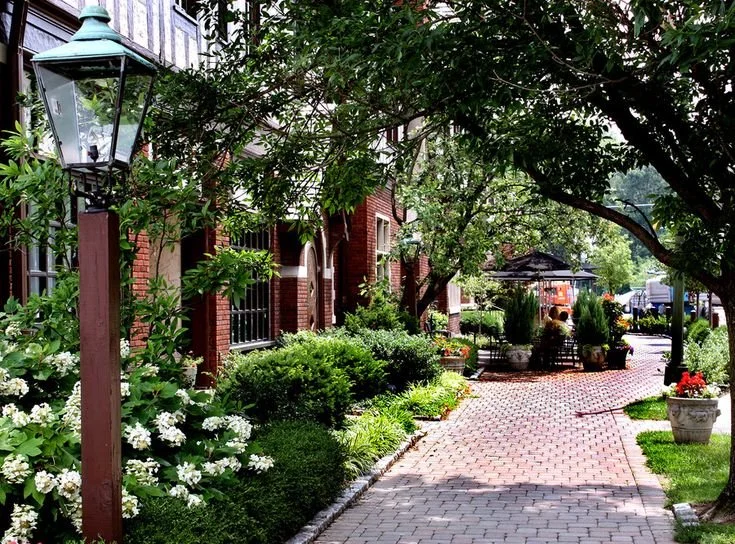
Walkable Street in Mariemont, Ohio
The City Beautiful Movement: Elevating Urban Life Through Beauty and Civic Pride
Emerging shortly behind the Garden City movement was another transformative idea: the City Beautiful movement, with both shaping early twentieth-century urban planning. While not exactly simultaneous, their time periods overlapped and their ideas interacted within the same era of reform-minded city design.
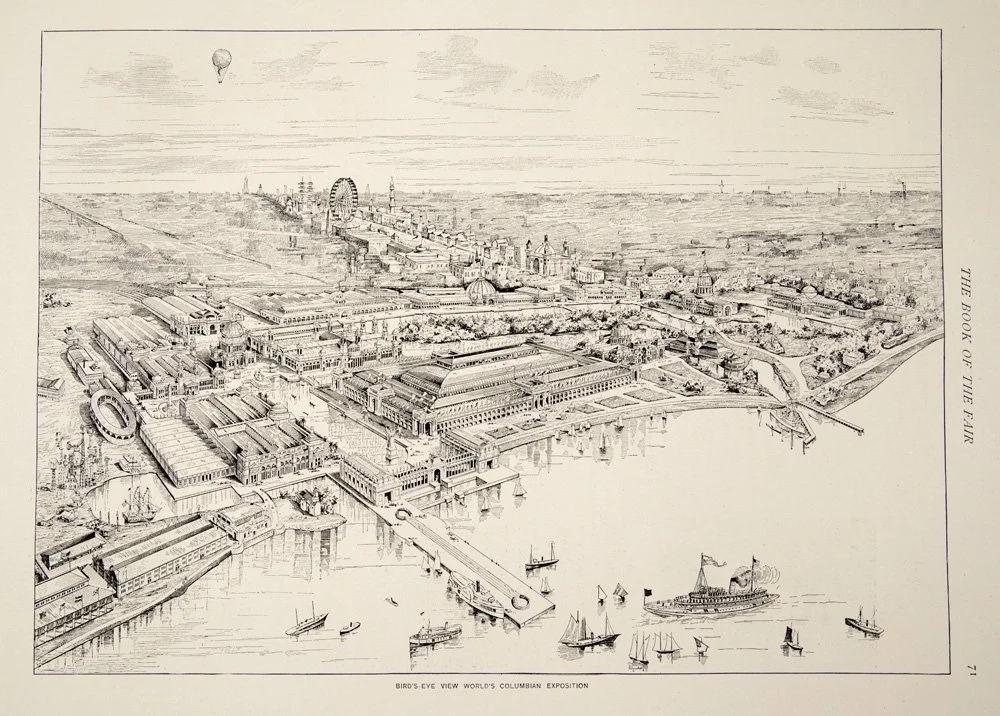
1893 Chicago World’s Fair Plan
Emerging in North America during the 1890s and gaining momentum after the 1893 World's Columbian Exposition in Chicago, this movement emphasized the beautification and monumental grandeur of cities as a means of promoting civic virtue and social order. Influenced by Beaux-Arts principles and the designs of architects like Daniel Burnham, the City Beautiful movement sought to improve urban life through grand boulevards, civic centers, parks, and classical architecture, a body of work often referred to as civic art. The belief was simple yet powerful: beautiful surroundings inspire beautiful behavior.
American cities became living laboratories for these ideas. Washington, D.C., with its iconic National Mall, and Cleveland's civic center and cultural gardens became celebrated examples of the movement. Chicago's 1909 Plan, spearheaded by Daniel Burnham, profoundly shaped the city's lakefront, park system, and civic spaces, making Chicago a hallmark of City Beautiful planning. Similarly, Kansas City's extensive park and boulevard system, designed by George Kessler, is often cited for its integration of green space and urban form. In the realm of the Garden City movement, Mariemont, Ohio, designed by John Nolen, remains one of the clearest American interpretations of Ebenezer Howard's vision, blending residential, commercial, and park areas within a thoughtfully planned community.
While the Garden City movement focused on decentralization and self-contained communities, the City Beautiful movement worked to transform existing cities from within. Together, these two movements represent complementary approaches to the same fundamental question: How do we create places worthy of the human spirit? Both recognized that great communities require intentional design, respect for human dignity, a balance with natural beauty, and spaces that bring people together in community.
A Guiding Vision for Today
The legacy of both the Garden City and City Beautiful movements continues to influence modern town planning, emphasizing the importance of creating livable, equitable, and beautiful communities. In an era of rapid urbanization and environmental concern, these historical precedents remind us that sustainable development isn't a new concept, it's a return to principles that once guided the creation of our most cherished places.
By adopting the name Garden City, we pay homage to these philosophical and historical roots of thoughtful town planning. More importantly, we underscore our commitment to transforming spaces in ways that respect both their natural heritage and urban potential. Whether working on a neighborhood revitalization, a new mixed-use development, or a public space enhancement, the Garden City vision serves as our guiding principle.
We believe in projects that harmonize human needs with environmental stewardship through the traditional art of city-making. We believe that communities should offer both the contemplative beauty of a garden and the vibrant energy of a city. And we believe that the places we create today should serve not just this generation, but generations to come.
That's why we're called Garden City, as a reflection of our calling and life's work, because just as the human story begins in a garden and moves toward the city, great communities have always grown from carefully tended seeds of vision, planted with hope for flourishing that spans generations.
What historical movements or design principles inspire your vision for community development? We'd love to hear your thoughts in the comments.